What is a Screw Press Dehydrator? What are the Differences Between It and Plate-and-Frame, Belt, and Centrifugal Dehydrators?(Ⅱ)
II. Differences Between Screw Press Dehydrator and Other Dehydrators
1. Screw Press Dehydrator
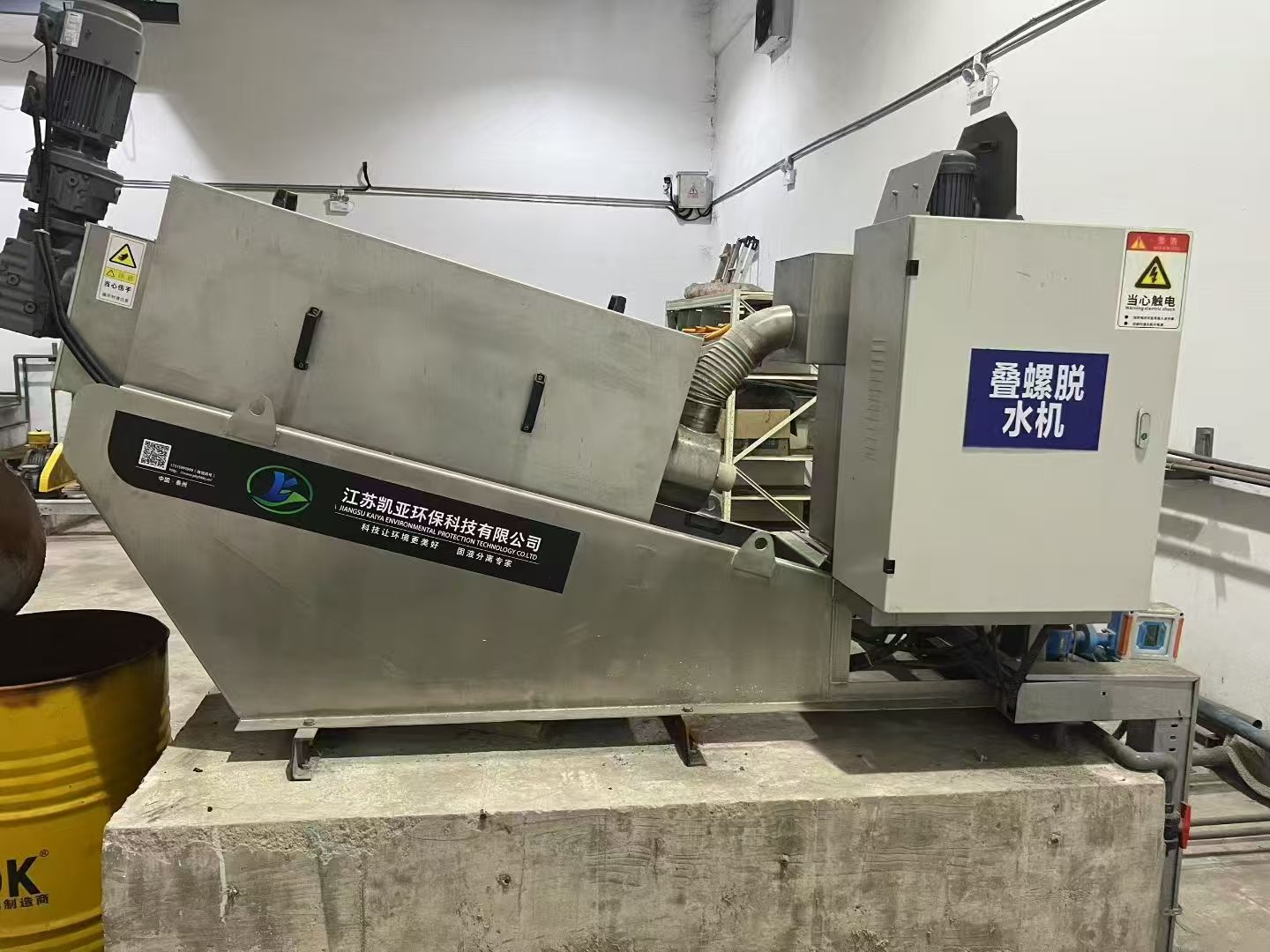
It features a small floor area, low flushing water consumption, low noise and a good workshop environment, but the processing capacity of a single unit is small and the solid content of the supernatant is high. Therefore, there are not many domestic application cases, and it is mainly used for the direct dewatering of activated sludge in small sewage stations. In the construction of sewage stations, the design of sludge concentration tank can be canceled, saving costs.
With the same sludge treatment capacity, the screw press dehydrator can save 85% energy and only take up half the floor area compared with the centrifugal dehydrator; in terms of surface cleaning, it can save 95% water compared with the belt dehydrator.
The screw press dehydrator is especially suitable for treating oily sludge such as flocs from food processing factories after pressure treatment. The required sludge moisture content at the inlet of screw press dewatering is generally 95% ~ 99.5%, and the moisture content at the outlet is generally 75% ~ 80%.
2. Plate-and-Frame Filter Press
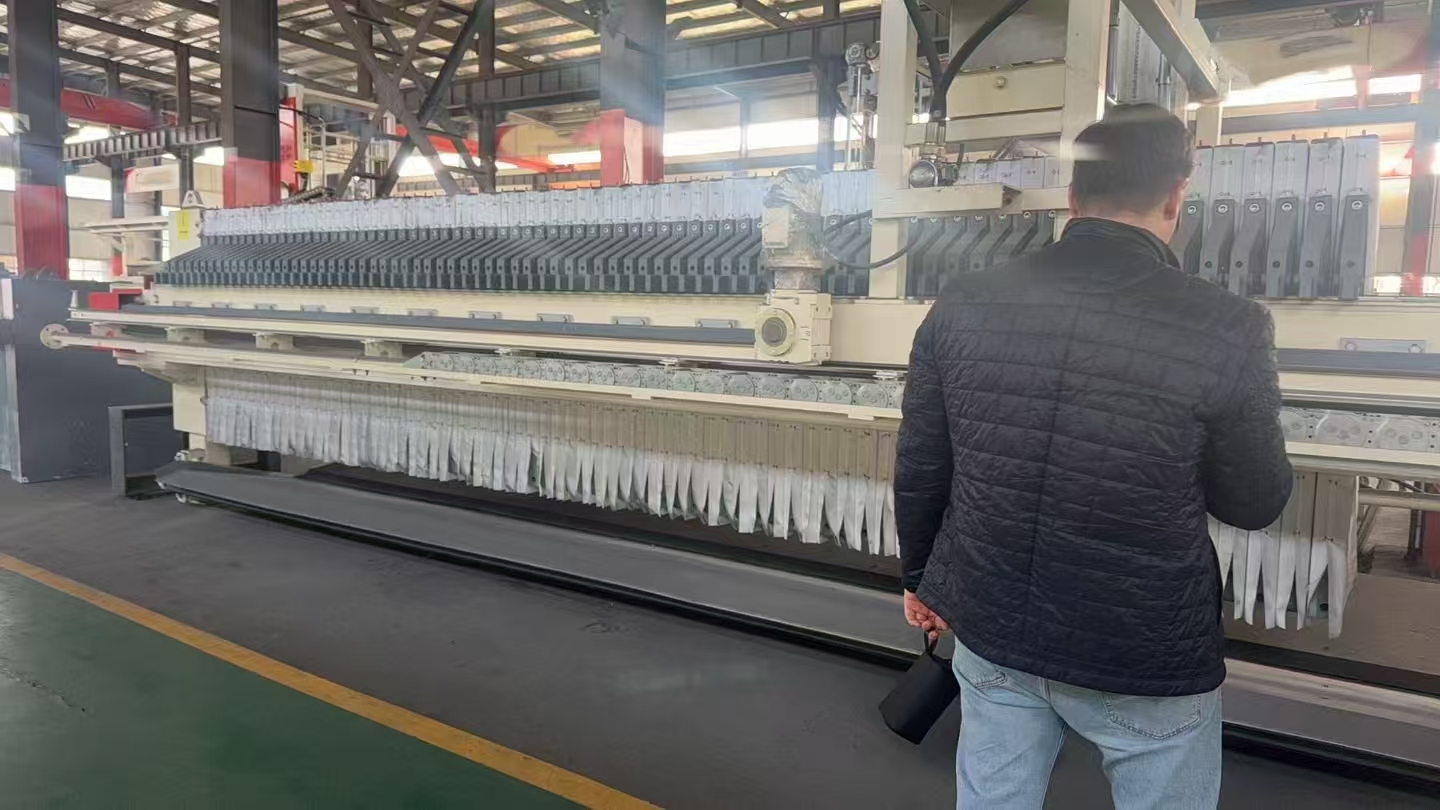
The plate-and-frame filter press squeezes the sludge through the plate and frame, making the water in the sludge discharge through the filter cloth to achieve the dewatering purpose. It can filter suspensions with solid particle size above 5μm and solid concentration of 0.1% ~ 60%, difficult-to-filter materials with high viscosity or colloidal state, and substances with high requirements for filter residue quality.
It has obvious advantages and disadvantages: it has strong adaptability to inlet sludge concentration, high solid content of outlet sludge, and small dosage of flocculant (even no flocculant is needed); however, the equipment occupies a large floor area, operates intermittently, cannot realize continuous sludge inlet treatment, and has low efficiency. The equipment is open during operation, resulting in a poor working environment. In addition, the plate-and-frame filter press has many auxiliary equipment, so the failure rate of subsequent dewatering treatment is relatively high.
However, after several years of development, the plate-and-frame filter press has also met the requirements of modern sewage treatment plants. For example, full automatic operation of the system can be realized through PLC system control. Its filter pressing, filter plate movement, filter cloth oscillation, compressed air supply, filter cloth flushing, feeding and other operations can all be completed through PLC remote control, greatly reducing the labor intensity of workers.
3. Belt Filter Press
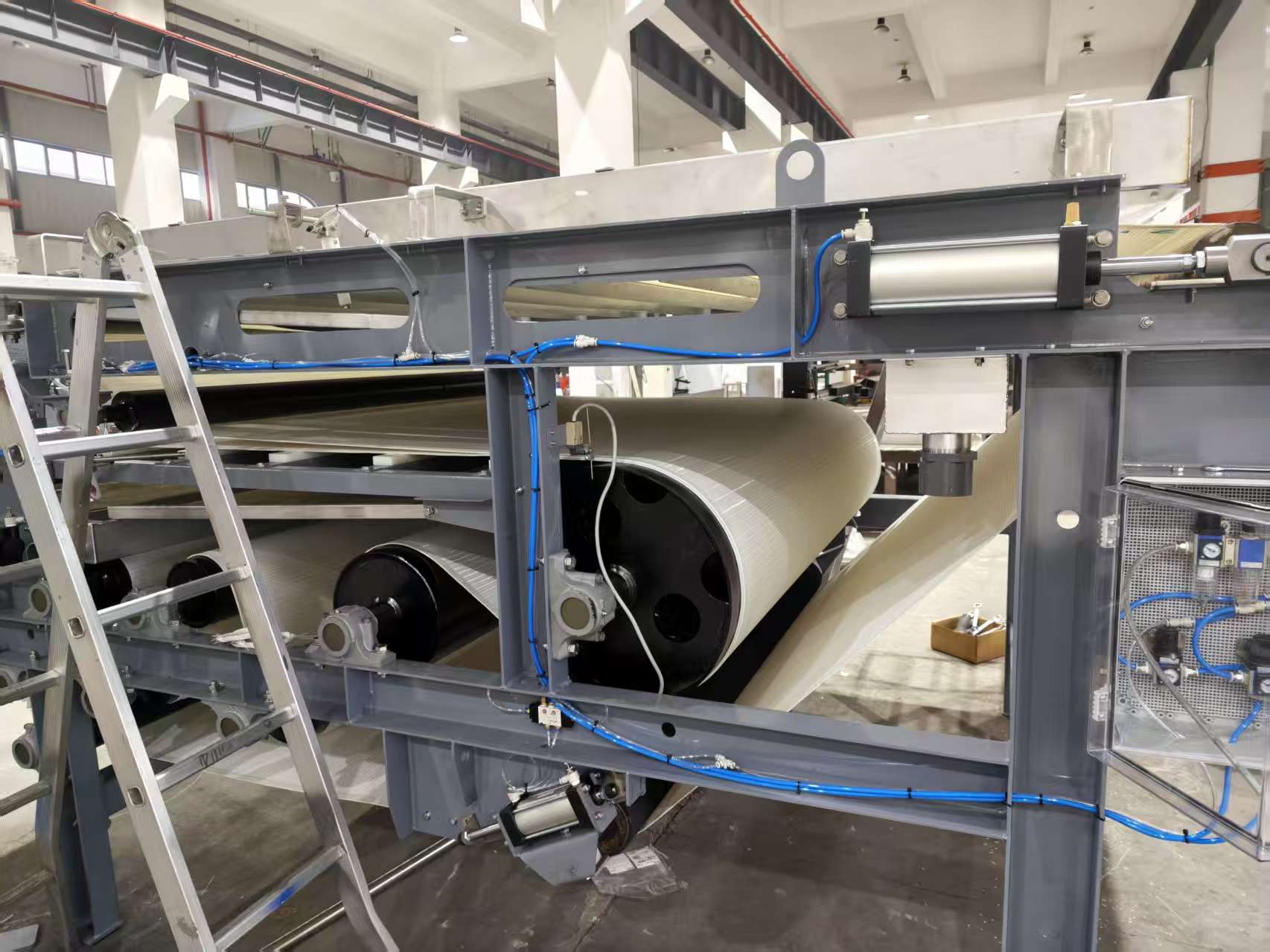
The belt filter press dehydrator clamps the sludge layer with two upper and lower tensioned filter belts, passes through a series of regularly arranged roller pressing cylinders in an S shape, and forms extrusion and shearing force on the sludge layer by the tension of the filter belts themselves to squeeze out the capillary water in the sludge layer and obtain a filter cake with high solid content, thus realizing sludge dewatering.
It was introduced into China early and is accepted by most sewage plants and waterworks. It has low noise and low power consumption, and the sludge dewatering effect is less affected by the inlet sludge load. Its advantages include low moisture content of outlet sludge, relatively simple management and control, and low requirements for the quality of operators. The disadvantages are large floor area and flushing water consumption, and easy filter cloth clogging and filter belt deviation.
4. Centrifugal Dehydrator
The centrifugal dehydrator is mainly composed of a rotating drum and a screw conveyor with a hollow rotating shaft. Its equipment layout is compact and the floor area is small, which can significantly reduce infrastructure investment.
It has the integrated function of sludge concentration and dewatering, can perform continuous dewatering treatment, is not prone to failures, is less affected by the change of inlet sludge concentration, and has high sludge solid content and large sludge output. Compared with belt and plate-and-frame dehydrators, it consumes less flocculant and cleaning water, so its operating cost is lower. The disadvantages are high power consumption and high noise. The outer edge of the rotating drum or screw of the centrifugal dehydrator is extremely easy to wear. At present, the outer edge of the screw of the new centrifugal dehydrator is mostly made into assembly blocks for easy replacement, and its material is generally tungsten carbide with an expensive price.
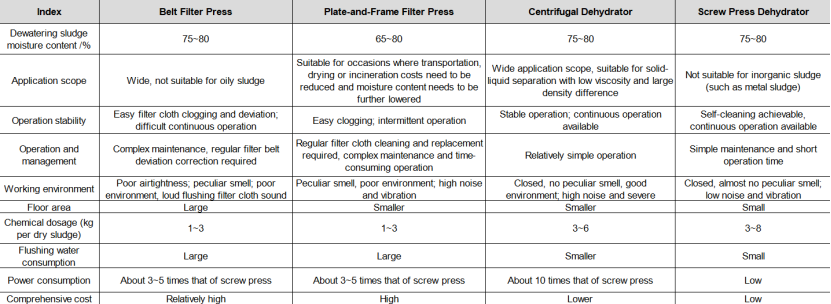
Comparison Table of Different Types of Dehydrators
Related News
With more than 10 precision production lines, we have an excellent technical and design team to provide you with high-quality products with preferential prices.
Privacy Policy
Tel: 400-9926-919
E-mail: zhangshuangandyss@gmail.com
Address: Building 4, Innovation and Entrepreneurship Industrial Park Economic Development Zone, Taizhou City, Jiangsu Province