What is a Screw Press Dehydrator? What are the Differences Between It and Plate-and-Frame, Belt, and Centrifugal Dehydrators?(Ⅰ)
Sludge dewatering processes are divided into three categories by principle: vacuum filtration dewatering, pressure filtration dewatering and centrifugal dewatering, with main equipment forms including belt filter presses, plate-and-frame filter presses, centrifugal dehydrators and screw press dehydrators. This article mainly introduces the screw press dehydrator and its differences from other types of dehydrators.
I. What is a Screw Press Dehydrator?
1. Definition
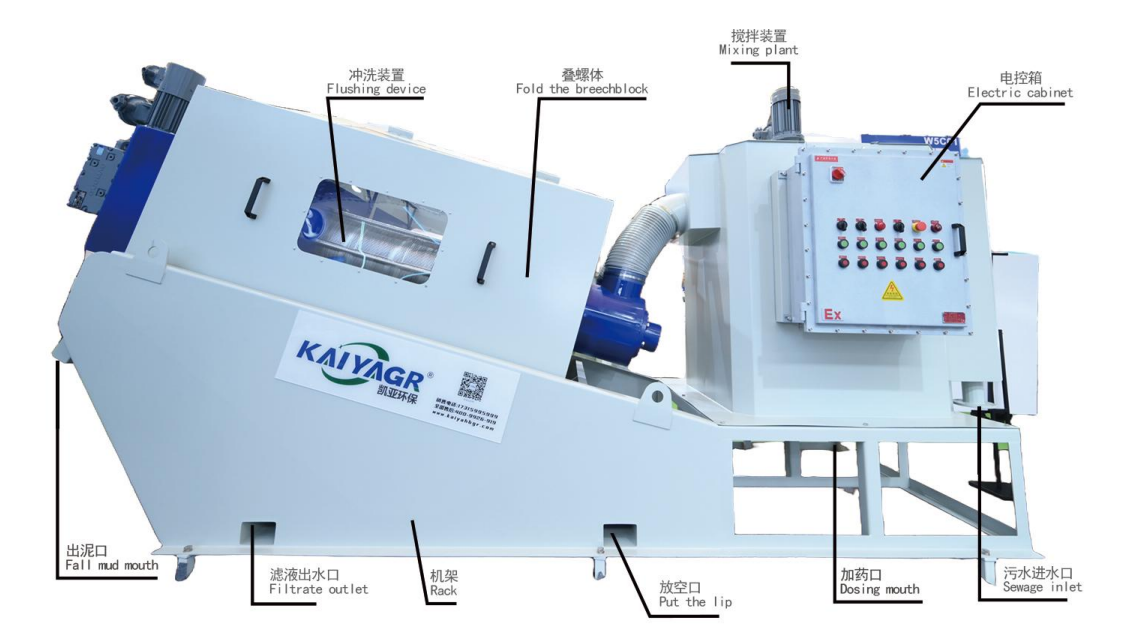
The screw press sludge dehydrator is a new type of solid-liquid separation equipment that uses the principle of screw extrusion. It realizes the extrusion and dewatering of sludge through the strong extrusion force generated by the change of screw diameter and pitch, as well as the tiny gaps between the moving rings and fixed rings.
2. Composition
(1) Screw Press Body
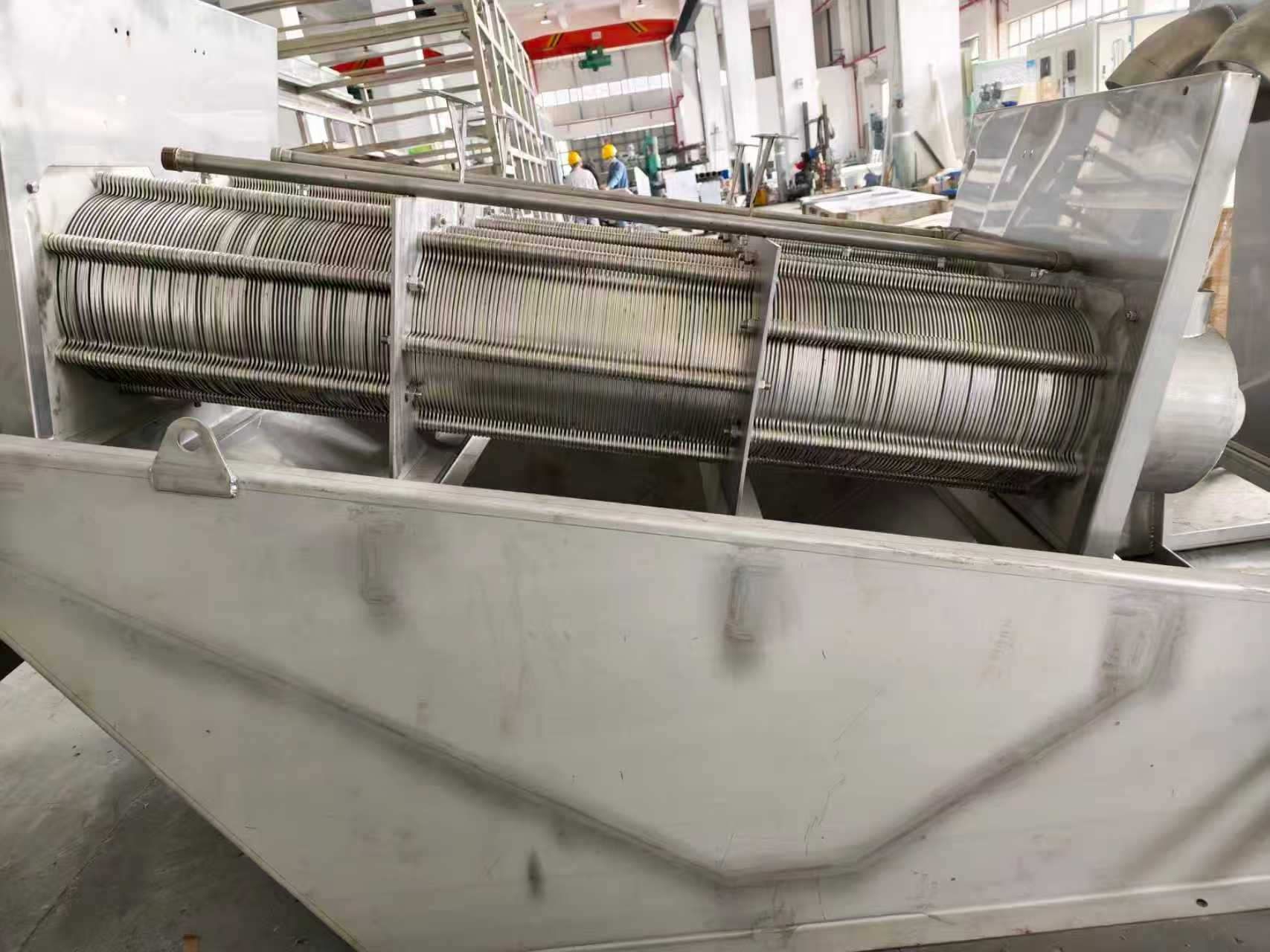
The screw press body consists of fixed rings, moving rings, a screw shaft, screw rods, gaskets and several connecting plates. The fixed rings are connected by six screw rods, with gaskets and moving rings installed between them. Both fixed and moving rings are made of wear-resistant materials, ensuring a long service life of the whole machine. The screw shaft passes through the middle of the fixed and moving rings, and the moving rings are loosely sleeved on the screw shaft.
(2) Screw Shaft
The screw shaft is composed of a shaft and spiral blades, and the shaft is welded by a solid shaft and a hollow shaft. During assembly and welding, the solid shaft and hollow shaft are first welded, then rough-turned after welding to ensure the coaxiality of the shafts at both ends, and finally the spiral blades are fully welded to the shaft.
(3) Drive Device
The drive device is the power source of the equipment, and its performance directly affects the performance of the whole machine. Therefore, a high-performance motor is generally selected, with a protection class of IP54 and an insulation class of F.
(4) Filtrate Trough
The filtrate trough is welded by plate parts and used to collect the filtrate pressed out by the main screw press body. It is connected to the frame with screws around, and a flange is set on the side of the trough for connection with external equipment.
(5) Mixing System
The mixing system is mainly used to fully mix sludge with chemicals to form flocs, which are then fed into the main screw press body for extrusion and dewatering.
3. Dewatering Principle
After sludge is concentrated by gravity in the concentration section, it is transported to the dewatering section of the screw press. As the filter gaps and screw pitch gradually become smaller during movement, and under the blocking effect of the back pressure plate, a huge internal pressure is generated and the volume is continuously reduced, achieving the purpose of sufficient dewatering.
1. Concentration: When the screw pushing shaft rotates, the multiple fixed and moving stacked plates arranged around the pushing shaft move relatively. Under the action of gravity, water is filtered out from the gaps of the relatively moving stacked plates, realizing rapid concentration.
2. Dewatering: The concentrated sludge moves forward continuously with the rotation of the screw shaft; towards the cake outlet, the pitch of the screw shaft and the gaps between the rings gradually become smaller, and the volume of the spiral cavity shrinks continuously; under the action of the back pressure plate at the outlet, the internal pressure increases gradually. Driven by the continuous operation of the screw pushing shaft, the water in the sludge is squeezed out, the solid content of the filter cake increases continuously, and the continuous dewatering of sludge is finally realized.
3. Self-cleaning: The rotation of the screw shaft drives the moving rings to rotate continuously. The equipment realizes a continuous self-cleaning process through the movement between the fixed and moving rings, thus cleverly avoiding the clogging problem common in traditional dehydrators.
4. Operation and Operation
Turn on the spray device 10 minutes before starting the machine. Sludge enters from the sludge inlet, and if the flow rate is too high, the excess mud water will flow back from the overflow port to avoid overflow. Then it flows to the flocculation mixing tank, blends with flocculants to form flocs, and enters the main dewatering body for concentration and dewatering. Clear water flows out from the gaps of the fixed and moving ring plates to the liquid collection trough. The sludge is squeezed along the conveying direction of the screw shaft, the space becomes smaller and the internal pressure increases, making the sludge drier, and finally it is discharged from the sludge outlet.
Turn on the spray device half an hour before shutting down the machine to clean the sludge and impurities on the screw shaft and fixed/moving ring plates. The entire working process of the screw press is automatic, saving costs.
Related News
With more than 10 precision production lines, we have an excellent technical and design team to provide you with high-quality products with preferential prices.
Privacy Policy
Tel: 400-9926-919
E-mail: zhangshuangandyss@gmail.com
Address: Building 4, Innovation and Entrepreneurship Industrial Park Economic Development Zone, Taizhou City, Jiangsu Province