What is a Screw Press Dehydrator? What are the Differences Between It and Plate-and-Frame, Belt, and Centrifugal Dehydrators?(Ⅲ)
III. Common Faults and Solutions of Screw Press Dehydrator
1. Sludge Clogging and Jamming of the Main Dewatering Body
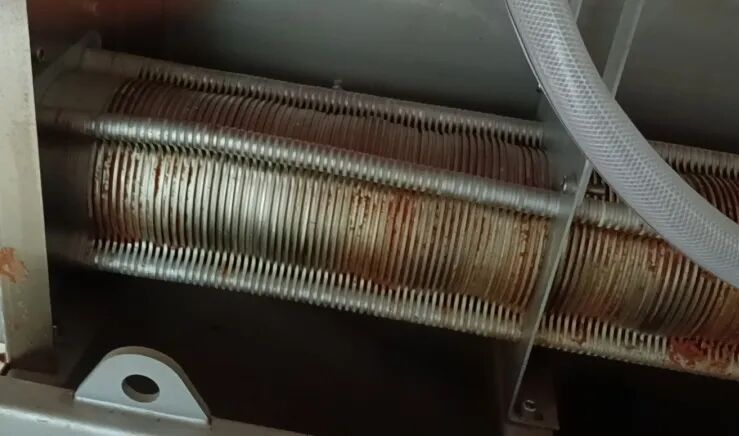
Causes:
1. Equipment quality problems, especially the flatness of the screw shaft and ring plates. As the main dewatering components of the screw press, if the manufacturer cuts corners and omits the leveling process of the surface of the shaft and ring plates, the equipment is prone to sludge clogging during use.
2. Sludge properties. Sludge is divided into organic sludge and inorganic sludge. Organic sludge is characterized by high organic content, easy decay and odor, fine particles, small specific gravity, high moisture content and difficult dewatering, colloidal hydrophilic substances, and easy transportation through pipelines; the characteristics of inorganic sludge are exactly the opposite.
Using the screw press to treat sludge with too high inorganic content, or due to the coarse particles and large specific gravity of sludge leading to fast mud-water separation speed, while the screw rotation speed of the screw press is low, the moisture content of sludge is already very low before it is discharged from the filter chamber of the screw shaft, and the filter cake is extremely lacking in fluidity, thus causing clogging in the dewatering section.
3. Improper operation. Different models of screw presses correspond to different processing capacities. If the sludge inflow into the screw press is much larger than its processing capacity, the equipment will run overloaded; if the screw press is not cleaned and emptied before and after use, the remaining sludge will adhere between the spiral blades, leading to equipment clogging.
Solutions:
1. First, let the screw press run idly for about 10 minutes with the spray device on before use; after using the equipment, turn off the feeding, let the screw press run idly for about 30 minutes to completely empty the residual sludge inside, and clean the spiral blades with clean water at the same time.
2. In case of slight clogging, try to reverse the screw press (there is a "frequency conversion reverse" button on the control interface) or turn on the spray flushing to solve the problem.
3. In case of severe clogging, stop the operation immediately, overhaul the equipment, flush it with a large amount of clean water, and remove the screw shaft to clean the sludge attached to it if necessary.
Slight shaft clogging is inevitable during the operation of the screw press. What is more important is to master the correct operation method in accordance with the equipment operation requirements during daily operation to avoid shaft clogging.
2. Wet Sludge Discharge of the Screw Press
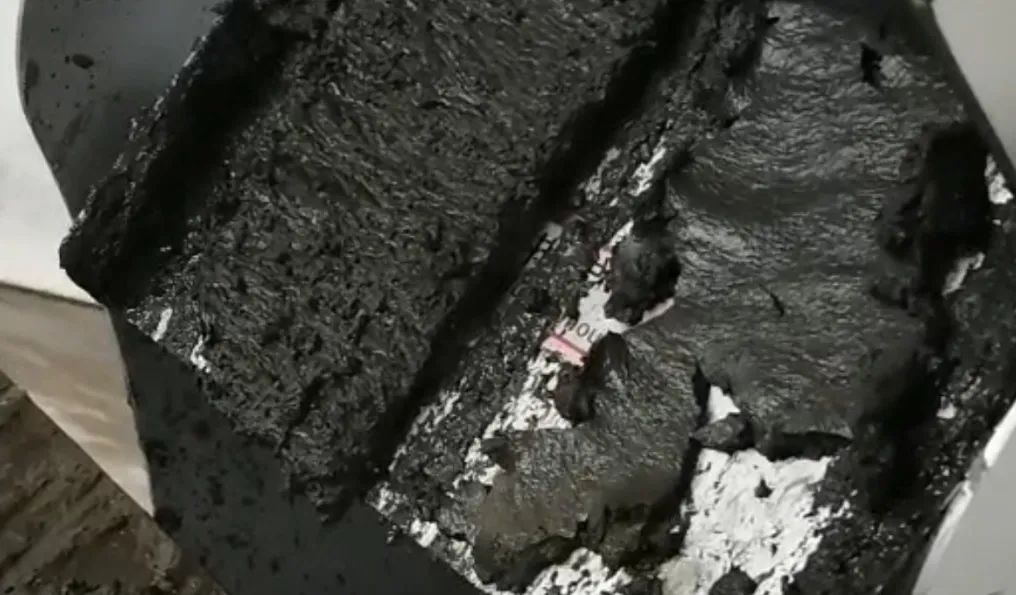
Causes:
1. Flocculation problems. Due to the particularity of the operation principle of the screw press, the sewage treated by it must be pretreated with chemicals, and after the sewage is flocculated and precipitated, it is pumped into the equipment for dewatering. The adaptability of chemicals to sewage, the dosage ratio of chemicals, and the solubility of chemicals will all affect the size of flocs in the sewage.
If the flocs are too small, they cannot meet the feeding requirements between the spiral blades, leading to wet sludge pressing; if the flocs are too large, they will retain more water and reduce the dryness of the filter cake.
2. Inadequate equipment commissioning. In terms of commissioning: first, commission the flocculation effect of sewage, second, adjust the rotation speed frequency of the main shaft, third, adjust the gap size of the back pressure plate and the sewage flow rate at the sludge inlet. Professional technicians will adjust the sewage feeding flow rate and the gap size of the back pressure plate according to the actual situation such as sewage characteristics and floc size.
Solutions:
1. Chemical commissioning is very important. First, select suitable chemicals according to the characteristics of the sewage to be treated, and then adjust the chemical dosage ratio according to the flocculation speed and size of flocs, so that the sewage can achieve a good flocculation state after entering the reaction tank.
2. In addition to chemical commissioning, the adjustment of the back pressure plate is also very important for the screw press. Therefore, after purchasing the screw press, it is best to ask professional technicians to adjust it to achieve better treatment effects.
3. Distortion and Deformation of Screw Press Ring Plates
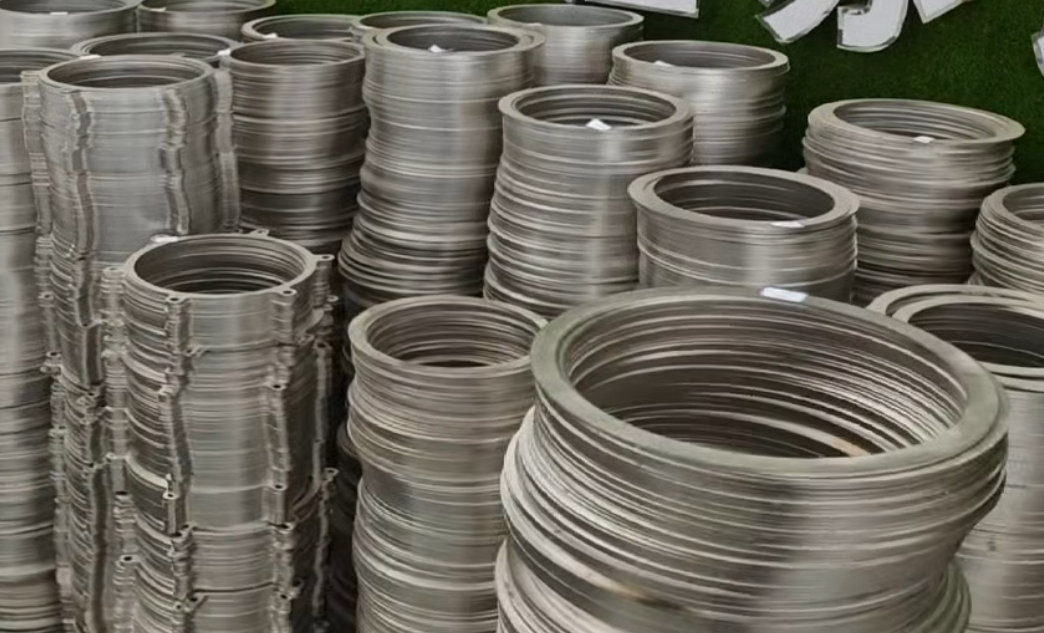
Causes:
1. Equipment quality problems. The filter cavity formed by the stacking of the fixed and moving ring plates of the screw press will have relative movement between the fixed and moving ring plates during operation. If the flatness between the ring plates is insufficient or the thickness of the ring plates is not enough, the inner ring plates will be severely worn during the use of the screw press, leading to sludge bubbling and leakage, and the ring plates will be squeezed and deformed after long-term use.
2. Excessively high feeding flow rate. Different models of screw presses correspond to different processing capacities. The feeding flow rate should be adjusted specifically according to the actual processing situation of the screw press and chemical commissioning. If the feeding flow rate is too high and exceeds the bearing range of the main screw press body, the ring plates will run overloaded and deform.
3. Sludge properties. If the sludge contains sand, oil, glue, a large amount of solid waste, or easy-to-dry dead sludge, it will not only easily cause clogging, but also lead to unbalanced internal pressure, resulting in wear and deformation of the screw press ring plates.
Solutions:
1. First of all, we should take preventive measures. Before purchasing the equipment, we should not only care about the equipment price, but also learn more about the product quality and after-sales service to ensure that the equipment itself has no quality problems.
2. The feeding flow rate can be adjusted through valves. During installation, it is best to add an overflow pipeline. When the feeding of the flocculation tank of the screw press is too full, it will flow back through the overflow pipeline, thus reducing the operating load of the screw press ring plates.
3. Ensure the feeding concentration of the screw press (related to chemical adjustment). If there are large slag blocks, metal impurities and other substances in the materials, a filter device must be added at the water inlet.
Related News
With more than 10 precision production lines, we have an excellent technical and design team to provide you with high-quality products with preferential prices.
Privacy Policy
Tel: 400-9926-919
E-mail: zhangshuangandyss@gmail.com
Address: Building 4, Innovation and Entrepreneurship Industrial Park Economic Development Zone, Taizhou City, Jiangsu Province